

Byrdcliffe’s Long Record
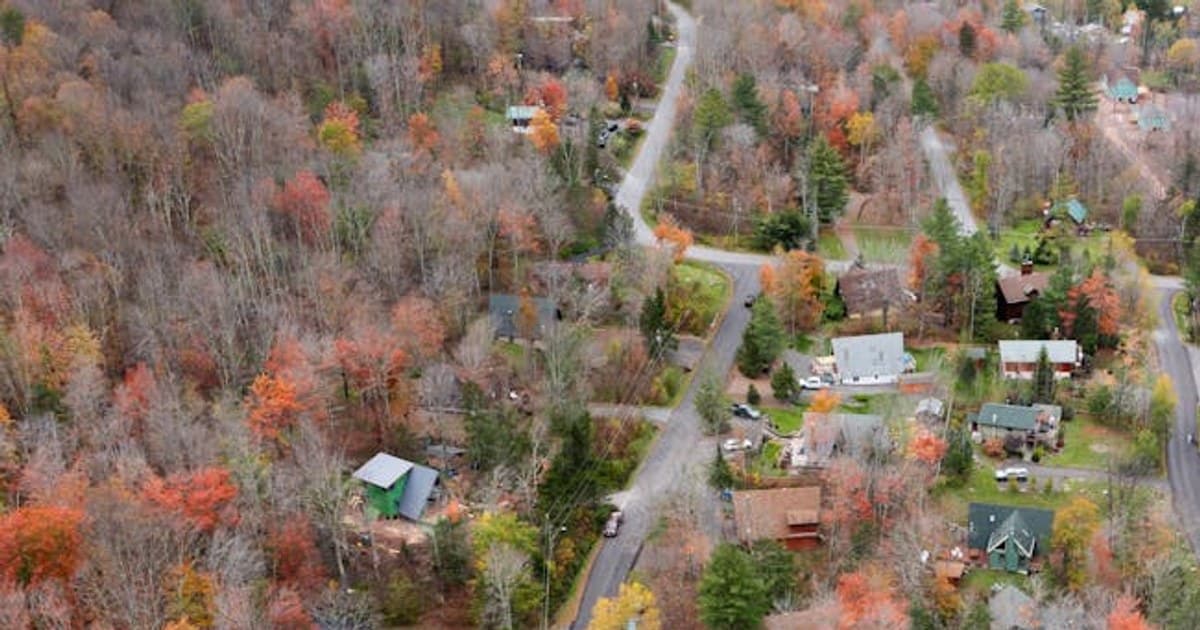
Byrdcliffe Colony has operated on a wooded hillside above Woodstock, New York since 1902, which makes it one of the oldest continuously-operating artist colonies in America. It was founded by Ralph Radcliffe Whitehead, Jane Byrd McCall, Bolton Brown, and Hervey White — four figures who met through the British Arts-and-Crafts movement and decided to build an American version of the utopian artist-colony model on land Whitehead bought in 1902. The colony’s name is a portmanteau of Whitehead’s middle name (Byrd) and McCall’s middle name (Radcliffe, stylized). The hand-built studios, the original Villetta Inn, the large central barn, and the surrounding 300-acre campus are mostly intact.
A guide for adults 21+ on what Byrdcliffe is today, how to visit, and the residency program’s current character.
The 1902 Founding
Whitehead was a wealthy English philanthropist who had studied with John Ruskin at Oxford and arrived at the idea of an American utopian artist community while touring the US in the 1890s. McCall was his wife. Brown was a respected landscape painter. White was a Midwestern-born writer (who would later break with Byrdcliffe in 1905 to found the looser Maverick colony down the road — see the Maverick Concerts deep dive).
The four built the colony’s initial buildings in 1902-1904 on the land Whitehead purchased for around $75,000, designed to house working artists self-sufficiently. The original program combined painting, furniture-making, weaving, and pottery under a deliberately non-commercial ethic. Studios were given to artists for the summer; in exchange artists contributed to the colony’s ongoing upkeep and the work produced belonged to the artists.
Historical Significance
Byrdcliffe is cited as the oldest continuously-running arts colony in America, and the claim holds up against every rival. MacDowell Colony in New Hampshire began in 1907, Yaddo in Saratoga Springs in 1900 (though it formalized as a residency in 1926), the Ox-Bow School in Michigan in 1910, and various short-lived 19th-century utopian communities predated Byrdcliffe without surviving. Byrdcliffe is the longest continuous operation.
The colony’s first decades attracted a serious roster — Bolton Brown’s landscape painting at Byrdcliffe, Zulma Steele’s furniture, Dora Wheeler Keith’s stained glass — and produced enough decorative-arts work that original Byrdcliffe pieces now appear in museum collections nationally.
The Campus Today
The 300-acre campus sits on the hillside above Woodstock village, accessed via a narrow road off Rock City Road. Key buildings include:
- The Villetta Inn — Whitehead’s original 1902 inn, now used for colony events and lodging.
- The Loom Studio, the Paint Studio, the Pottery Studio — the original hand-built workshops, still used by residency fellows.
- White Pines — the Whitehead family residence, preserved in period condition.
- The Kleinert / James Center for the Arts — Byrdcliffe’s downtown exhibition space on Tinker Street (covered in the Woodstock galleries article).
Visitors can walk the campus self-guided most of the year; the Guild of Craftsmen runs occasional open-studio days and craft programming for the public.
The Residency Program
Byrdcliffe runs a formal summer residency program for visual artists, writers, composers, and new-media artists. Applications are competitive; residencies run four weeks on the campus with studio space, lodging, and meals provided. The program has hosted thousands of residents over the past several decades and functions alongside MacDowell and Yaddo as one of the three major East Coast colony-tradition residencies.
For visitors, the residency is not publicly accessible — resident artists are working, and the campus during residency season operates under discretion rules. Open-studio days are announced in advance.
Visiting
Self-guided walks on the grounds are free during daylight hours. The Kleinert / James on Tinker Street handles the downtown programming. A good Byrdcliffe-focused afternoon:
- Park at the village green.
- Walk up Rock City Road and follow signs to the Byrdcliffe grounds (about 15 minutes on foot; drivable in three).
- Self-guided walk of the campus: Villetta Inn, White Pines, the studio cluster. Allow 45 minutes.
- Descend to the Kleinert / James for the current exhibition.
- Lunch on Tinker Street.
For the broader Woodstock weekend, see the Woodstock anchor guide.
Cannabis and Byrdcliffe
The grounds are private property; no consumption. The colony’s residency program and the broader cultural record are the point of the visit, not the context for cannabis use. The rule is the same as at the Woodstock galleries: no consumption on the grounds, and licensed shops only for adults 21+.
The larger context: Byrdcliffe’s 1902 founding, Maverick’s 1916 concert hall, and the Woodstock gallery scene’s ongoing density together define the town’s actual cultural record — older and more serious than the 1969-festival association that most first-time visitors arrive expecting. A Byrdcliffe visit is part of taking that record on its own terms.
Compliance, Quickly
- 21+ only, licensed shops only. Verify via OCM QR code at cannabis.ny.gov.
- No consumption on Byrdcliffe grounds — private property.
- No consumption at the Kleinert / James Center — private exhibition space.
- No consumption in cars, driver or passenger.
- Start low, go slow on edibles; read the label for milligrams per serving.
Where to Go Next
- Woodstock — artist-colony weekend
- Maverick Concerts — the oldest continuous summer chamber-music festival
- Woodstock galleries worth the walk
- Cannabis-friendly cabin stays in the Catskills
This is editorial, not legal advice.
Jay, Editorial Team
Jay pairs cannabis to setting — town guides, dining, festivals, outdoor adventures, and the regional editorial that ties cannabis into specific places and moments. Their writing anchors the town anchors, cabin and lodging coverage, music heritage and Tanglewood-arts pillars, and the lifestyle context that makes a region feel real.